.svg)


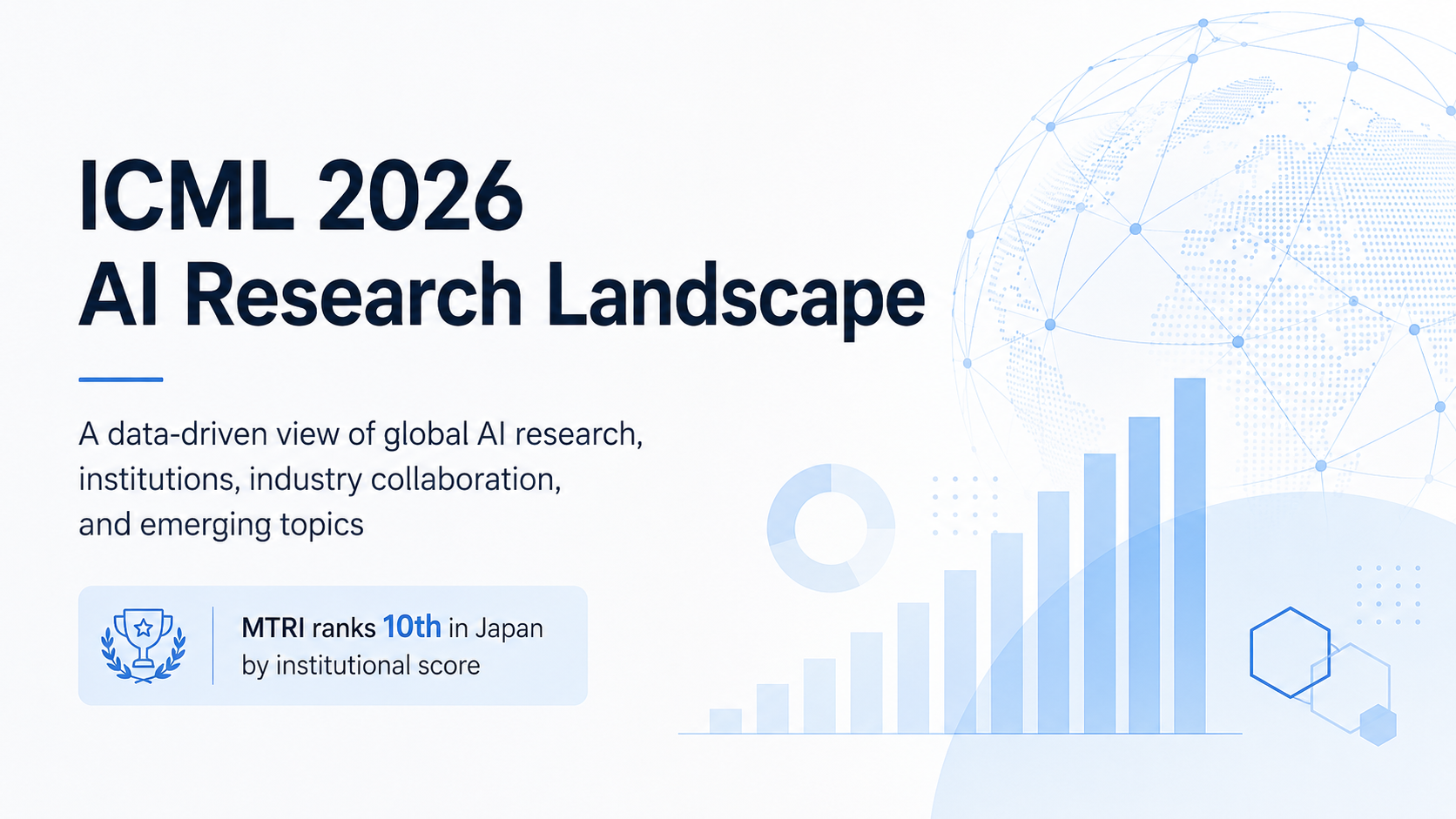
We are pleased to announce that three papers involving MTRI researchers and collaborators have been accepted at EMNLP 2026. The accepted work includes research led by MTRI Research Scientist Yiqun Sun, as well as work led by MTRI Research Intern Yongjian Chen. This achievement marks MTRI’s continued momentum in top-tier AI research, building on two papers accepted at ICML 2026 and reinforcing MTRI’s growing contribution to agentic AI, multimodal reasoning, and trustworthy AI research.
The Research: Technology Advancing Human-Centered AI
The accepted work spans several areas central to MTRI’s research agenda:
- Corpus2Skill: Turning Enterprise Knowledge into Navigable Agent Skills — exploring a new approach to enterprise knowledge access in which AI agents navigate structured knowledge hierarchies rather than relying only on conventional retrieval. This work directly supports seamless knowledge transfer across global teams and enables organizations to unlock their institutional knowledge for diverse talent pools worldwide.
- When Models Hear What They Expect: Diagnosing Prosodic Heuristics in Multimodal Sarcasm Detection — Led by our Research Intern Yongjian Chen, this paper examines how multimodal language models interpret speech, revealing systematic reliance on superficial prosodic cues across English and Mandarin Chinese. Understanding these limitations is critical for building AI systems that communicate reliably across linguistic and cultural contexts—essential for global talent collaboration.
- GGSS: Steering Bias Away Without Retraining Generative Vision–Language Models — investigating inference-time methods for reducing bias in generative vision-language models without retraining the underlying model. This research advances trustworthy, equitable AI systems that serve diverse users and talent communities worldwide.
These publications reflect our broader commitment to advancing agentic AI, information retrieval, multimodal reasoning, and trustworthy AI: research areas that are increasingly important for building reliable AI systems for legal, professional, and other knowledge-intensive services—and fundamentally, for enabling safe, effective collaboration among global teams across borders and disciplines.
Building a Global Research Community: Technology × Talent × Trust
MTRI’s mission extends beyond conducting research within our own organization. We aim to develop MTRI as a trusted platform connecting international AI talent, by bringing together researchers, engineers, universities, and industry collaborators across countries and disciplines to exchange ideas and work on meaningful AI challenges.
We see this mission through three interconnected dimensions: Technology, Talent, and Trust.
Technology
Our research in agentic AI, multimodal reasoning, and bias mitigation directly addresses the computational foundations needed to support seamless global collaboration. By advancing AI systems that are more reliable, interpretable, and equitable, we enable organizations to leverage talent and knowledge across geographical and cultural boundaries.
Talent
Frontier AI research is inherently international. Important advances often emerge when researchers with different academic backgrounds, technical perspectives, languages, and experiences work together.
Through MTRI’s international research network and collaborations with academic and industry partners, we seek to create opportunities for researchers to contribute to globally relevant AI research regardless of where their careers began. Our goal is to foster an inclusive research ecosystem in which AI talent across countries, cultures, and disciplines can collaborate on shared technological challenges.
Trust
International collaboration in AI ultimately depends not only on technological capability, but also on trust. With support from the Pacific Rim AI Initiative Foundation (PRAII), MTRI seeks to advance research within a broader framework of responsible international AI collaboration.
PRAII promotes safe, human-centered AI talent development, cross-cultural understanding, research trust and transparency, and voluntary ethical and compliance alignment across institutions and borders. These principles complement MTRI’s efforts to translate frontier AI research into trustworthy applications for knowledge-intensive and regulated environments.
The broader PRAII vision recognizes that technological collaboration can also serve as a mechanism for building understanding and trust among researchers and institutions operating across different cultures and societies.
Learn more about the Pacific Rim AI Initiative Foundation (PRAII)
From Research to Responsible Innovation
The integration of these three dimensions: technological capability, international talent collaboration, and trusted governance - positions MTRI’s research at the intersection of academic innovation and responsible real-world impact.
- Technology provides the capabilities.
- Talent brings together the people and perspectives necessary to advance them.
- Trust creates the foundation for those capabilities and people to collaborate responsibly across institutions, cultures, and borders.
Together, Technology × Talent × Trust represents MTRI’s approach to building AI research that is not only technically ambitious, but also internationally collaborative and socially responsible.
Each of our three papers accepted at EMNLP 2026 contributes to a different part of this broader mission.
A Step Forward
The acceptance of these three papers at EMNLP 2026 represents another step in MTRI’s development as an international AI research organization. Following our two papers accepted at ICML 2026, these new results demonstrate the growing breadth of our research - from agentic knowledge systems and multimodal reasoning to bias mitigation and trustworthy AI.
We congratulate Yiqun Sun, Yongjian Chen, and all co-authors and collaborators on this achievement and look forward to sharing their work with the international NLP community at EMNLP 2026.